Showing posts with label Lithium. Show all posts

Wednesday, 4 March 2015

Free UK Technical Analysis 04/03/2015

DISCLAIMER: I am not FCA authorised or authorised in any sense to give financial advice. Do not regard any of the following links, or information as investment or trading advice.


Today's Analyses:

https://drive.google.com/open?id=0B0wd9XTIWftmfmcyeURobmdUTDdmeS1UREtUV3N0cDBtVDQ3Q1NpeHhPWVJkQ3oyX1BMS0k&authuser=0

How to use these reports:

  • http://themaskedstocktrader.blogspot.co.uk/2015/03/technical-analysis-instructions.html
  • More information regarding this project can be found here:
http://themaskedstocktrader.blogspot.co.uk/2014/11/my-experience-with-quantitative-finance.html

Friday, 17 October 2014

Bacanora Minerals - Effects of Higher Lithium Prices

Good evening,


I'm going to re-run some old numbers and use the world's oldest and crudest method for showing resource deposit potential. This is not a look at OPEXs, but if you want an analysis of this, then I suggest you look through Okenia's posts over on the LSE bulletin board for Bacanora Minerals.


Some points will undoubtedly be repeated across older posts of mine, but don't be put off by this. 


The data that I will be using will have come from these websites: 


http://www.bacanoraminerals.com


http://www.mining.com/web/batteries-leave-lithium-hydroxide-facing-tight-supply/


Numerical Analysis:


All of these figures are obviously estimates and should not be used as trading or investment advice.


- The RNS entitled "Expansion Plans for Sonora Lithium Project" told us that the plant and mine would be capable of processing up to 50,000 tonnes of LCE per year (an upgrade from the 40,000 we previously knew of).


- Taking the price of lithium as it currently stands (~$6,500/tonne) you would expect a project value over the lifetime of the mine of $13,000,000,000 in revenue terms and $10,000,000,000 in profit terms at an average production cost of $1,500 per tonne.


50,000 tonnes * $6,500 

=$325,000,000 (Production revenue per year).


50,000 tonnes * $1,500 

=$75,000,000 (Production cost per year).


50,000 tonnes * $6,500 - $1500 

= $250,000,000 (Production profit per year)


$325,000,000 * 40 year mine life 

=$13,000,000,000 (Revenue over the mine's 40 year life span).


$250,000,000 * 40

= $10,000,000,000 (Profit over the 40 year mine lifetime).


Using the revised figure from mining.com of ~$8,000/tonne for 2015 and beyond at the same extraction cost (although this may not be realistic now the company has confirmed that they will be providing for the lithium hydroxide and lithium carbonate market) gives the following figures:


50,000 tonnes * $8,000 

=$400,000,000 (Production revenue per year).


50,000 tonnes * $1,500 

=$75,000,000 (Production cost per year).


50,000 tonnes * $8,000 - $1500 

= $325,000,000 (Production profit per year)


$400,000,000 * 40 year mine life 

=$16,000,000,000 (Revenue over the mine's 40 year life span).


$325,000,000 * 40 year mine life

= $13,000,000,000 (Profit over the 40 year mine lifetime).


We must remember that these numbers are only estimates and I implore people to look through the RNS releases and do their own numerical analysis on this company. I still find it hard to believe that such "telephone-esque" numbers are appearing in my calculations, but the more I look at this company the more I come to the conclusion that it's staggeringly undervalued in the market. 


The Masked AIM Trader


Wednesday, 13 August 2014

Bacanora Minerals - A Small Sector Comparison

Bacanora Minerals has performed well since my purchase of stock at 67p and in my opinion, looks set to continue on a path gently upwards.


I'm not going to run a huge comparison of the company's lithium assets to those of other major producers, but instead try to illustrate the extent to which I think Bacanora Minerals is undervalued with this small spreadsheet (this is tip for a good way to understand Bacanora Minerals' potential, rather than an article explaining why I think it's great):


Company NameTotal LCE Across Concessions LCE Production/YearOpperating Expendature per tonneProjected/Actual price per tonneRevenue/Year (expected or actual)Current Market Cap (USD)Current Market Cap (GBP)
Bacanora Minerals5,360,00052,587$1,968$6,000$212,556,654$105.49m£63.19m
Sociedad Quimica y Minera-40000 (2010)---$7750m £4640m
Western Lithium11,000,00026,000$3011 (excluding 2SO4 & NA2SO4 by-product credits)$6,000$124,000,000$72.65m £43.52m
RB Energy Inc17,100,00013724$3194 (excluding 2SO4 & NA2SO4 by-product credits)$6,000$38,509,544$89.52m £53.62m


In the case of Bacanora Minerals in particular, the total tonnage of LCE was taken from the conservative figures in their admission to trading on AIM presentation:


http://www.bacanoraminerals.com/reports/pdf/investorpresentation.pdf


I also had to make an assumption about the the life of the mine of the El Suaz and Fleur Lithium Projects, which I took (arguably mistakenly) to be twenty years, thereby allowing me to summon a very low estimate of an LCE production figure per year of 17587 tonnes.


I was sadly unable to find figures for Sociedad Quimica y Minera online, who are apparently the largest world producer of LCE and who would have been an excellent comparison for us to make.


Comparing market capitalisations has the potential to be very misleading with these companies as obviously large resource companies like SQM produce more than just LCE and Bacanora Minerals likewise has large borate assets. Consequently, I'm not going to write anymore (I'm a tech trader by heart), but allow the numbers for Bacanora Minerals' lithium projects to speak for themselves. The numbers in the table above for Bacanora Minerals refer to the stake owned by the company itself (excluding Rare Earth Minerals' stake) and I still believe that there is a huge amount more upside available here for the company to become sensibly valued. 


To help you make up your mind on the company, I would highly recommend looking in depth at the other companies in this table and at some of the other lithium miners in the world to get an idea for the huge potential that Bacanora Minerals has as a company.


Trade well,

The Masked AIM Trader.

Sunday, 3 August 2014

Bacanora Minerals - An analysis of the Tesla Rumours.


I’m going to start this post by making it quite clear that this short article is definitely not saying that Bacanora Minerals have done a deal with Elon Musk. I am however going to discuss the growing rumours (and what I think is a real possibility) that they could be candidates to deliver lithium to the joint Gigafactory venture between Elon Musk’s Tesla and Panasonic.


This post is really a broad analysis of the other articles that have begun to float around the internet linking Tesla and Bacanora Minerals, and in writing this I hope to allow you to draw your own conclusion on the rumours that are beginning to circulate about the two companies.


Lithium Transport Links:


Let us begin by having a look at where Tesla said that the Gigafactory would be built:


The general public were initially given five locations including sites in Nevada, Arizona, Texas, New Mexico or California, but with Reno Nevada appearing to have been chosen as the final resting place for the site (although there has been talk of more than one site across the five states mentioned above).


On Thursday 31st July Elon Musk was quoted saying in a conference call that Tesla had “essentially completed the creating of the construction pad of the Gigafactory in Nevada”. While a finite decision on the site has not been made yet, as to further quote Musk “we want to make sure things sorted out at the state level, (and that) incentives are there.”, this still seems to be a pretty conclusive piece of evidence as to the final location of the Gigafactory.map_projects.jpg


How this links to Bacanora Minerals:


Well, first we have to take a step back and analyse where the Sonora Lithium Project is (North-West Mexico) and then we have to further analyse where the location sites for Musk’s Gigafactory were to be placed relative to the Sonora Project.


In the event of multiple sites being created by Musk, any of the five states that were initial candidates are easily accessible for Bacanora Minerals to export lithium to.


The easily accessible freight train lines allow fast and relatively cheap transport of the minerals (raw or processed) needed direct to the proposed Gigafactory.

USA-train-map Modified.jpg


Having scavenged this already very useful map of main U.S. train lines from the realms of the internet, I added the Sonora Lithium Project site on to it and connected it by the green line (which conveniently follows an existing train line) as seen. The fastest and most economic route takes the export line across the Mexico Border connecting up to Tucson where the mineral product would then follow the freight line via the west coast cities, up until the point of San Francisco where it would change line and continue up to Reno.


This allows for a reliable and continuous supply of lithium to the plant where it can be used in manufacturing.


Battery Grade Lithium Supply Links:


From the Rare Earth Minerals RNS 2986G we learnt that analysis of the Sonora Lithium project reserve showed 99.5% battery grade lithium (a quality almost unheard of in resource estimates), as such it really would make logical sense for a deal to be done, because Tesla would be able to get hold of high grade lithium at good prices utilising a derivative purchase strategy that will be discussed later.


The fact that this supply is already at such a high grade shows why they wouldn’t have chosen to pick a deal with a Supplier already in the U.S., or via a Canadian Reserve, which could also incur higher transportation costs.


The already relatively low cost of freighting lithium in from Mexico is counteracted by the relatively minimal onsite processing necessary due to the already almost pure ionic lithium. This could well make using Bacanora Minerals as a supplier the cheapest option as well as the easiest in terms of efficiency and ease of supply chains.


The Potential For a Long Dated Derivative:


This will be a somewhat difficult concept to understand for many who aren’t privy with derivative contracts, but I’ll try and explain it as best as I can.


I’m going to use the term “long dated derivative”  in this case to describe what is in reality a glorified futures contract. For those who don’t know what a futures contract is I thoroughly recommend this video (made by another of my investing heroes) entitled “What are futures?”: https://www.youtube.com/watch?v=nwR5b6E0Xo4


A “long dated derivative” contract in this case is effectively a way in which both parties (Bacanora Minerals and Tesla) could hedge against changing commodity prices. Now, the point here in a nutshell is that with a smaller sized resource company like Bacanora Minerals, Elon Musk has much more power to negotiate on longer term pricing of the commodity he’s purchasing from them (in this case battery grade lithium).


To use a practical example, Elon Musk could negotiate to initially pay them above market price for battery grade lithium while locking them in at that price for set number of years to hedge against the growing demand for lithium globally.


Larger resource companies would be much more reluctant to take out these longer contracts because they don’t need to, because their global asset control is larger and therefore they’re already hedged against supply induced price rises (because they primarily have a larger  control on global output) and further to this they have much more technology available in the medium to long term to decrease their cost per tonne than the smaller resource companies have and thus can protect and or increase their profit margins without becoming locked into a contract.


In short, the main advantage with Tesla doing a deal with Bacanora Minerals would certainly be that they would have a lot of pricing power in the medium to long term.


To round up this information, there are certainly a lot of potential reasons why Tesla could chose to do a deal with Bacanora Minerals for the supply of battery grade lithium, with some reasons seeming pretty unique to Bacanora Minerals itself. Tesla would certainly have a low cost option in picking Bacanora Minerals as a partner in terms of both transport, supply price and availability. I personally wouldn’t be building a long position in Bacanora Minerals based on these rumours that have begun to circulate, but instead be building a long position becuase I think that with or without a Tesla link up the company will likely reward shareholders very well over the medium and long term with the potnetial for more short term volatility in both directions. 


For more information see my write up on the company: 

Friday, 1 August 2014

Bacanora Minerals (BCN) - resource mining at its finest.

Bacanora Minerals is an exploration-stage company focussing on borate and lithium mineral deposits in Mexico. The Company’s mineral portfolio so far includes Tubutama Borate, Magdalena Borate and Sonora Lithium projects.


I’m going to make three points in this article although I do appreciate that one could make many more in support of the company. These points are going to cover: the Resource Sector IPO curve, the relationship between Bacanora Minerals and Rare Earth Minerals and the future primary demand implications for borate and lithium globally, with special emphasis put on the Sonora Lithium project.


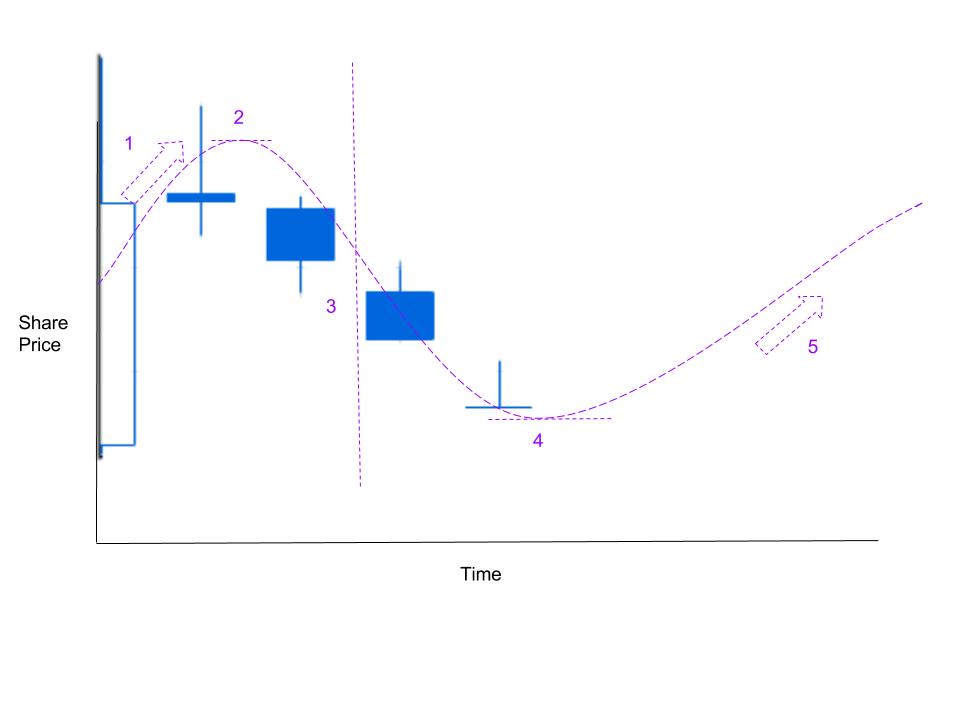
Bacanora Minerals is highly interesting for a number of reasons, which I’m going to discuss in more detail later. Primarily, I think that even without its highly positive portfolio a good trade could be made as a result of what I have christened (somewhat arrogantly) the Resource Sector IPO Curve:Resource Sector IPO Graph
Key:


1. IPO sentiment induced rise.
2. IPO sentiment reduction and IPO profit taking.
3. The stop in driven IPO sentiment and further profit taking.
4. The point of oversold.
5. The share price recovers towards IPO levels (and or above) as news-flow begins to drive the price.


Although for many this will be stating the blatantly obvious, it’s a very useful point to remember with resource sector companies, as it can greatly help making a good entry position.


Here’s what we get if we loosely overlay the daily chart since the IPO of Bacanora Minerals:


Bacanora Minerals Graph with Anotations.jpg
If we assume that the Resource Sector IPO Curve will hold true for Bacanora Minerals (and I see no reason to suggest that it won’t), we can see that the share price at its current levels is perfectly placed to begin the rise upwards towards £1 and beyond. Although this technique doesn’t always pan out correctly and certainly has some pitfalls, I’ve found that oftentimes it can be highly useful to ascertain when to make an entry into a resource sector stock post IPO.


Another reason why Bacanora Minerals is so interesting to me as a trader and investor is the relationship it has with another AIM listed company, Rare Earth Minerals:


Rare Earth Minerals hold an 11.94% stake in Bacanora Minerals, but they also have a 30% stake in Mexilit (with the other 70% being owned by Bacanora Minerals) under a joint venture arrangement. This effectively means that Rare Earth Minerals have a 30% stake in the El Sauz and Fleur concessions (known as the Sonora lithium project), which has been a major driver in Rare Earth Minerals’ huge share price gains this year-to-date (please see the share price following the 21st August 2013 “Final Drill Results Mexico Lithium Project” RNS for proof of this).


This relationship between the two companies is particularly useful for investors and traders, because it appears that Rare Earth Minerals is presently slightly ahead of Bacanora Minerals in terms of the share price curve (even if we ignore it’s further indirect investment in the project via its 11.94% stake in Bacanora Minerals). This relationship is most easily presented through a comparison of the two company’s market capitalisations:


Rare Earth Minerals (as of 01/08/14) =£89.71(m)
Bacanora Minerals (as of 01/08/14)   =£53.61(m)


Not wanting to offend any shareholders in Rare Earth Minerals (this is after all a discussion about Bacanora Minerals) I’m going to ignore their projects in Greenland and Australia. I’m in part doing this because it avoids some maths, but also because if you were to go through the RNSs from Rare Earth Minerals and plot them on the same graph as the share price for the company, you would find that there’s a pretty strong correlation between positive news regarding the Sonora Lithium Project and the company’s share price.


If we therefore assume (yes, I appreciate that there are significant flaws to this) that both companies are valued only on their stake in the Sonora Lithium Project, we end up with a quite clear market capitalisation disparity:


Rare Earth Minerals (as of 01/08/14) = £89.71(m) for a 30% stake in the Sonora Project.
Bacanora Minerals (as of 01/08/14)   = £53.61(m) for a 70% stake in the Sonora Project.


If we assume that the market is fairly valuing Rare Earth Mineral’s 30% of the Sonora Project at a share price of 1.63p and a market capitalisation £89.71(m), we would logically expect Bacanora Minerals (owning 70% of the project) to have a minimum market capitalisation of £62.79(m) or a share price of 89.06p and realistically be in a share price range between 90p and £1.10. 


Furthermore, on a realistic level we have to factor in the value associated with the borate projects, with the La Ventana borate project for example going into production next year. Being 100% owned by Bacanora Minerals this is another sharp arrow to add to the quiver of profit potential and if we added the value of this project onto the current market capitalisation of Bacanora Minerals we could see a target of between £2.00-2.50.


Table two entitled “Preliminary Financial Highlights”, shows quite clearly the potential value that the borate projects can add to the value of the company. The annual revenue of $25(m) on an expected mine life of twenty five years is especially exciting, as if proved it could cause a serious re-rate in the company’s share price. These borate projects added to the already misrepresented relative value of the Sonora Lithium project mean that I am personally targeting a conservatively low, but fair value around £1.50 - £2.00 with a lot of further upside potential.


Bearing in mind the above, we can now look in a more specific direction - at electric cars. Invented in the early 19th century, they saw a decline in use up until the point of 21st century technology developments and have since seen an enormous boom in use. Within the last few years the use of electric cars have more than doubled in the European Union alone (22,000 E.V.s sold in 2012 compared to the 50,000 sold in 2013) and we continue to see the growth in sales with analysts expecting electric cars to have at least 10% market dominance by 2020. The most notable recent news in this market has been automobile giant BMW Group jumping on the Electric Vehicle bandwagon with their New I3. With this we can see that the big names in the industry have realised this is a market they need a share in, and what this is going to do is push the market as well as the technology upwards as the big players try to gain dominance over the electric car.


Powered by a lithium battery, much like the one in your laptop, these cars require a good supply of raw materials. While the expected growth of the market for full electric of hybrid vehicles is still uncertain, if we follow the expected line of growth, up to 10% market share by 2020, the total number of electric cars sold in that year could be, on the low end of the guesses around 62 million or all the way up to 107 million.


So, if we take all the figures and do some maths, if 7.5 million electric cars are produced in the year 2020, with 15 kWh of batteries each containing 2 kg Li2CO3/kWh, the annual demand for the automobile industry alone would be 225,000 tons of lithium carbonate. This already a jump of 150% in demand for lithium based compounds since 2008, and we have only taken the automobile industry for the 2020 figures. Consequently the actual demand would be significantly higher still.


Take into account as well that the form of battery that the cars will need to take will likely change, that the lithium in already produced batteries isn’t easily recyclable, and that the projection figures for the growth in electric cars does not take into account the rapid urbanisation of the world, especially in LEDCs where you would expect electric cars to have dominance due to their low run cost and emissions and you have an enormous potential demand for Lithium.


If Bacanora was able to capitalise on only a small portion of this demand, the revenue streams would surely launch a company with a market cap of only  £53.61(m) into a much higher status. It is only going to be so long before the big investment players take notice of this, but once they do, we can expect a bull run in the resources sector, especially those in areas related to the growing market in E.V.s such as lithium, silicon and iron.


To conclude this short piece on Bacanora Minerals, I am investing in the company on the grounds that it’s significantly undervalued at its current share price for a number of reasons. In particular the relationship between Rare Earth Minerals and the Sonora Lithium Project illustrates that there’s a long way for Bacanora Minerals to move to the upside before even that project can be viewed as fairly valued in the market place. Further to this, the increasing resource demand for Lithium in particular is a longer term indicator of potential upwards share price pressure on Bacanora Minerals, with the Resource Sector IPO Curve showing that the current share price could well be a good time to begin to move funds into the company.