Saturday, 16 August 2014

How Can Global Companies Avoid Tax - A Starbucks Example.

People asking me about how Starbucks went about avoiding large amounts of tax in the UK is a question I get asked a bizarre amount - I'm not an accountant and I very rarely trade companies that are valued over one billion pounds, so I don't know why people think I'm qualified enough to answer this query.

These methods could actually apply to any reasonably large corporation and in some cases much smaller companies as well, but I'm going to use Starbucks as an example to keep things simple in this case.


Introduction:


1. Tax Avoidance Vs Tax Evasion


Tax avoidance is legal. Tax Evasion is illegal. This is not a point directly linked to Starbucks, but it's essential to understand that Starbucks were not doing anything wrong in a legal sense (they may have been in a moral sense, but that's not my prerogative to discuss). 


Tax avoidance is the process of reducing one's tax bill by utilising multiple tax jurisdictions, holding companies within these jurisdictions and multiple other inter-company transaction based techniques. Generally speaking, avoiding tax is the process of looking at the rulebook and asking "What can we get away with looking at these rules?" and "What loopholes may exist within these rules that we can utilise?". 


Tax evasion on the other hand is the illegal process by which a company or individual reduces their tax bill by utilising illegal methods. These methods could involve having a cash-in-hand business (if you're an individual), where you don't declare your real income to your tax authority, or by utilising foreign bank accounts (if you're a company) for investments based in other countries, so you can avoid paying high capital gains tax rates on the disposal of assets, etc.


2. Holding Companies:


A holding company is a company that's only purpose is to own stock in other companies and by this form a corporate group. Under normal circumstances they will not create goods or services itself and are usually formed in various tax haven authorities in order to utilise varying rules and legislation which help to reduce a company's tax exposure.


3. Profit and Loss: 


For tax purposes profits must be low. For shareholders profits must be high.


Profit = Sales Revenue - Costs.


This is a very important point to understand, because when all of this kicked off about Starbucks there were a few journalists at the time who were mistakenly saying that tax was paid on sales, when it is intact paid on profits.


This is a pretty obvious idea to many, but just in case some of you have missed this idea, tax is paid on the profits that a company makes. In order to reduce your tax bill you want your profit to be made (in technical accounting terms) in jurisdictions that have the lowest levels of tax, but as investors we are looking for good strong profits. Although this initially sounds counterintuitive, a company isn't going to become unprofitable just to avoid paying tax. Instead, they move their profits into low tax regions and their losses into the higher tax regions. This way shareholder value is retained with high profits after tax (which dividends are paid from) and the company also benefits by paying overall less tax.


4. Types of Tax: 


The first point to make here is that we are discussing the ways in which Starbucks may avoid paying corporation tax - a tax on companies. We're not discussing how it may avoid paying tax in all senses. So, for example, in the UK Starbucks employs around five-thousand people and will pay national instance contributions for those employees and business rates, etc. 


5. Where Tax is paid:


This is another very simple point, but UK corporation tax (the tax that Starbucks were paying very little of) is obviously paid in the UK. Therefore, Inland Revenue don't care about tax they may be avoiding elsewhere in the Starbucks global empire, but just tax that should be paid in the UK. Now, because I live in the UK I am going to discuss how the UK corporation tax bill was reduced by tax avoidance techniques and not about how Starbuck may be avoiding tax elsewhere in the world.


6. Tax Negotiations:


It's worth noting that any tax for companies is more of a negotiation than a checklist filled out between Inland Revenue and the company in question. Often there will be teams of expensive tax lawyers negotiating between the two parties and the governing tax authorities reserve the right to call the company on certain points of their tax strategy.


The Methods:

There are three main methods that you could use (they're not necessarily methods that all large corporations will use).


1. Increasing Costs:


As we know from point three of the introduction, Profit = Sales Revenue - Costs. Now, lying about how much sales revenue you're making would be tax evasion and it would also be very easy to check, making it not a great idea for companies who want to legally avoid tax. 


On the other hand, bringing up your costs so that they effectively wipe out profits within the jurisdictions with the highest tax rates is a way forwards - Inland Revenue won't make you pay loads of tax in the UK if you don't make loads of profits in the UK.


Now, really we need a diagram here, but instead you need to imagine the following set up:

                                Debt
USA----------------------------------------------->UK
        <----------------------------------------------                     
                                Interest 


This method works on the basis that  head office of Starbucks (which we'll put in the USA for this example) funds the UK operation. So debt is effectively transferred to the UK from the Starbucks head quarters in the USA and then the UK branch of Starbucks pays interest to the head quarters in the USA.


Now, what's great about this method is that interest paid within a company group is set by the company group's worldwide finance director, who probably lives in the USA near the Starbucks head quarters. This means that the interest rate can be set at a level that begins to absorb some of the profits that the UK operation maybe making and thus reducing their corporation tax bill in the UK.


There are issues with this method however:


One issue is that you can't say set and interest rate within the company group of fifty or one-hundred percent. In other words, Inland Revue are not daft enough to believe and accept that you would have an utterly uncommercial business and reserve the right to call you up on it (in the open market no one pays fifty percent on a loan).


Also, the interest income would still have to be paid in the USA, where the Starbucks head quarters reside (in this example), so while you can use this method to decrease your tax bill in one jurisdiction (the UK) you still have to pay the tax elsewhere, even if it may possibly be at a lower rate.


2. Franchising Costs:


This is the idea that the Starbucks brand has value and that in order to set up a Starbucks franchise I need to sign a licensing agreement. I can't turn my house into Morley's Micro Starbucks for example. 


Again for this we will need a little diagram:


                          6% of Sales 
UK-------------------------------------------------->Holland 
      <----------------------------------------- Licensing Office                                                                                                                                                     
                           Brand


This works on the basis that you charge the UK operations to be able to make and use the Starbucks brand and it works by having your licensing office in a very low tax jurisdiction (Holland for example). This means in the example above the six percent of the total UK sales for Starbucks would be sent to Holland and paid as tax there (where the tax rates are a lot lower than in the UK), but more than this, it also incurs a cost to the UK operation and can reduce the UK profits of Starbucks, thus reducing their UK corporation tax bill. 


This has become a very popular method for companies that have very highly valued, unique intangible assets, as it allows a lot of potential for very high rate licensing payments to reduce taxable profits substantially.


Again, as with method number one this can't be set at an astronomical rate. Starbucks would have to negotiate with the UK authorities for a number they could get away with and in order to do this they would discuss brand value, unique value they may have, etc.


3. Past Losses:

This is the idea that you can net past costs against current profits. This simply works on the exact same basis that capital gains tax does in the UK. 


So, for example, I have a business and it makes a fifty million pound loss in the first year, but then it makes a fifty million pound profit in the second year. Those two figures can be netted against each other so that for the second year in which I made that fifty million pound profit I don't have to pay any tax. 


50 million - 50 million = 0 


This method is handy to begin with for many companies, but it begins to become redundant once the business beings to become substantially profitable. In order for it to be of use, the business has to incur a huge operating loss to fully offset income. 


To sum things up, we can see a few methods that companies may chose to use to avoid corporation tax in the UK. The methods can often be used to avoid tax in other jurisdictions as well and often companies will employ a wide variety of these techniques in order to reduce their total tax bill across their global empire.


Friday, 15 August 2014

Quindell - New Technical Analysis

Quindell is a stock that I have a bit of an obsession with. The main reason behind this is that (regardless of having a long position in the stock) Quindell is in a war zone currently between bulls and bears. This stock is so exciting at the moment that I'm seriously considering writing some "cliterature" on the subject.


Now, the subject for today is technical analysis on the stock and how I've had to change my tune in regards to how I look at Quindell. I was the individual who used to post weekly technical analysis updates for Quindell on LSE and anyone who ever saw one of these would know that I used to look at the following indicators: MACD, KDJ, CCI, RSI and volume based candlestick movements.


Many people are now under the impression that technical analysis on the stock is useless, but actually it can still yield useful results, but you have to change how you assess the underlying ground on which the company has been shunted onto:


1. Standard indicators (MACD, CCI, KDJ, etc):

These indicators still seem to be useful if you're trading intra-daily, but otherwise they don't provide the same level of insight that they once used to. There are two reason for this, the first one is that they require a decent level of daily volume in order to be accurate and in the summer volume tends to fall across the board, reducing the accuracy of these indicators on all time frames. The second point is that these indicators have a tendency to become useless when the bid and ask become loaded by shorting influence.


2. Charting:


This is where I believe we can still usefully use technical analysis. Resistance and support levels combined with volume based analysis (my next point) are excellent ways in which we can still try to predict the future using technical analysis.


Let's take Quindell at the moment as an example:


200p throughout the latter half of July was the old support line, with 220p being the main resistance at that point. Currently, we have a major support line at 140p and a minor support line at 160p with the next line of resistance to break being at 180p and from there it will be a pretty quick run up again towards 200p, due to very low volume resistance lines between 180p and 200p


3. Volume:


Volume is a particularly useful thing to watch, because it helps to guide us towards what impact  events have on the underlying sentiment of Quindell. Also, without it we end up in a sticky situation whereby trading slows on tightening spreads (primary traders tighten things up to create volume) and if (like I do) you believe that the short interest in the company is systematically loading up the sell side of the book on occasion, this can cause very fast movements towards to downside.


Further to discussing the merits of looking at the volume, over very positive indicator that can be seen is by analysing the price movements of the following dates: April 22nd, June 11th and August 6th.


When you do this you'll notice that these three days are high volume days but more than this were all days on which a major price fall was seen. Now, obviously high volume doesn't always correlate with a price fall and vice versa, however we can use these three dates as a technical example of changing sentiment:


The important date to look at is August 6th, which was the day Quindell told us that July was a cash positive month. People at their screens on that day will know that the range was huge and that the share price hit 138p prior to closing for the day at 168p. This is known as a positive technical movement and illustrates a "technical change" in volume traded sentiment.


I'm going to conclude this post early rather than let it run on into my personal diatribe on all of the reasons to be bullish on Quindell, but I think that what we can see is that although the ground on which we can apply technical analysis has changed regarding Quindell, we can still find value within it.

Thursday, 14 August 2014

Quindell PLC - Understanding Institutional Investor Analysts.

Recently, I was fortunate enough that a good friend of mine arranged for me to visit a major investment bank in London. While I talked with the director of corporate finance, the subject of Quindell came up and we had an exhilarating, in depth discussion on the company.


What made this discussion particularly interesting was that we both came from opposite ends of the Bull-Bear Spectrum, with me sitting firmly with the bulls and him with the bears.


We discussed all of the major points: cash-flow, business model, Gotham City Reports, etc.


The point when we came together however was when I discussed the validity of his point about the implications of their cash-flow conversion rate (he was saying that this was the main reason why their in-house analyst was bearish on the stock), by discussing how institutional investors had significantly increased their positions in the company since the Gotham City Attack (Fidelity, Milton Asset Management, Artemis, etc).


The reason we came together on this point was because we both agreed that Fidelity (situated on the floor below us at the time I believe) are an excellent team of asset managers, but more than this have much more advanced research methods than investment banks.


Let's take a brief look at why:


1. Analyst Teams vs Analyst Lone-Wolves:

This is possibly the most important point that needs to be raised, which is that large asset management firms like Fidelity will have teams of analysts one one stock rather than just one analyst. The bank that I was visiting had one analyst on Quindell and my host said it was highly likely that Fidelity would have at least three analysts highly familiar with the stock for each sub-fund that had a position in the company.


2. Public Image:


My host at the investment bank I saw made a highly amusing point, that their in-house analyst was banned from meetings (AGMs, analyst meetings, etc) with Quindell.


This may only be a small point in the grand scheme of things, but being close to the company is essential in order to both truly understand how the company works, but also to get further ideas from the upper-management as to the onward progress their likely to make over various timeframes.


According to another friend of mine in the industry, hedge funds and asset management firms in particular are very good at not alienating themselves to firms, regardless of wether they're long or short and tend to be more tactful generally than the large investment banks are.


3. Management Stakes:


Personal stakes in the funds that they manage doesn't necessarily increase the actual level of their stock picking ability, but instead it makes certain that when these fund managers open a position in a stock that they have done their full due diligence and have covered all research bases fully.


Most investment banks will now actually trade or have any sizeable stake in the companies that they rate, as ninety percent of trades at these banks are primary trades, not proprietary trades. Even then, compared to the size of these large asset managers, the proprietary trading desks of these major investment banks are still not vast.


This means that the analysts for these major banks and brokerage firms only risk their jobs if their clients lose substantial percentages, as opposed to their jobs and a significant proportion of their net worth. Therefore, this is another prong in favour of following the asset managers rather than the investment banks and brokerage houses.


To sum up this very brief writeup, I think we can take away an albeit generalised, but pretty accurate view of the key differences between these two sides of banking world. Further to this, I personally believe that following the movements of these large asset managers is a sure fire way to successful stock picks - after all, they get paid such large amounts because they exceptionally good at their jobs and in asset management circles personal management stakes also play a strong incentive in ensuring good decisions are made. I am not saying that the rating from brokerage firms and investment banks should be ignored at all, but that I personally place the movements of respected asset managers higher than them in my personal rankings.


All the best,

The Masked AIM Trader.

Wednesday, 13 August 2014

Bacanora Minerals - A Small Sector Comparison

Bacanora Minerals has performed well since my purchase of stock at 67p and in my opinion, looks set to continue on a path gently upwards.


I'm not going to run a huge comparison of the company's lithium assets to those of other major producers, but instead try to illustrate the extent to which I think Bacanora Minerals is undervalued with this small spreadsheet (this is tip for a good way to understand Bacanora Minerals' potential, rather than an article explaining why I think it's great):


Company NameTotal LCE Across Concessions LCE Production/YearOpperating Expendature per tonneProjected/Actual price per tonneRevenue/Year (expected or actual)Current Market Cap (USD)Current Market Cap (GBP)
Bacanora Minerals5,360,00052,587$1,968$6,000$212,556,654$105.49m£63.19m
Sociedad Quimica y Minera-40000 (2010)---$7750m £4640m
Western Lithium11,000,00026,000$3011 (excluding 2SO4 & NA2SO4 by-product credits)$6,000$124,000,000$72.65m £43.52m
RB Energy Inc17,100,00013724$3194 (excluding 2SO4 & NA2SO4 by-product credits)$6,000$38,509,544$89.52m £53.62m


In the case of Bacanora Minerals in particular, the total tonnage of LCE was taken from the conservative figures in their admission to trading on AIM presentation:


http://www.bacanoraminerals.com/reports/pdf/investorpresentation.pdf


I also had to make an assumption about the the life of the mine of the El Suaz and Fleur Lithium Projects, which I took (arguably mistakenly) to be twenty years, thereby allowing me to summon a very low estimate of an LCE production figure per year of 17587 tonnes.


I was sadly unable to find figures for Sociedad Quimica y Minera online, who are apparently the largest world producer of LCE and who would have been an excellent comparison for us to make.


Comparing market capitalisations has the potential to be very misleading with these companies as obviously large resource companies like SQM produce more than just LCE and Bacanora Minerals likewise has large borate assets. Consequently, I'm not going to write anymore (I'm a tech trader by heart), but allow the numbers for Bacanora Minerals' lithium projects to speak for themselves. The numbers in the table above for Bacanora Minerals refer to the stake owned by the company itself (excluding Rare Earth Minerals' stake) and I still believe that there is a huge amount more upside available here for the company to become sensibly valued. 


To help you make up your mind on the company, I would highly recommend looking in depth at the other companies in this table and at some of the other lithium miners in the world to get an idea for the huge potential that Bacanora Minerals has as a company.


Trade well,

The Masked AIM Trader.

Tuesday, 5 August 2014

Extra Alternative Investments

It's funny how people who trade the AIM (like me) tend to view ourselves as the white knights of the investment world, surrounded by nothing but risk and turmoil in search of those huge rewards that go with the sector.


Well, I hate to break it to fellow traders on the AIM, but in my opinion the real white knights of the investing world are those that go a step further down the "alternative investment" route and pick the truly bizarre assets. These normally take more time, skill to pick profitably and specialist information on the subject, but nevertheless they can yield very large returns if done well: 

1. Whisky Casks: 


I was first introduced to this as an investment when I heard that good friend of mine had bought a whisky cask. In my friend's case he did intend on actually drinking it, but he also told me that it wasn't uncommon for people to sell the cask back to the distillery after it had matured - picking up a decent return on the way. 


Like buying stocks and shares, when you purchase a whisky cask you're not buying just whisky, but instead paying for a lot of extra costs (what we could describe as the whisky spread): VAT, insurance, storage at the distillery and bottling costs (assuming you choose to have the distillery bottle it). This does mean that in order to get a decent yield from your newly casked whisky you often have to let it sit for a minimum period of ten years.


In the USA it's much more common to hear people buying whisky in the bottled form and there are a few advantages to this: you have a more liquid investment (please excuse the pun) because it's much easier to auction just a bottle than a whole cask and it's easier to diversify on a lower budget - you can have many different bottles for the same price as a cask.


If we have a look at the return on the whisky indices from Q4 of 2012 to December of 2013, there are some clearly very impressive gains to be had in that market.


Before running out and buying a load of whisky to keep in your garage, it's worth noting that (ironically) it's not always a liquid asset (it can be difficult to find buyers and sellers) and it often requires a genuine interest in the subject in order to make good picks and thus substantial profits. The advice given to me when I was considering it was to start out with well known brands, as they're easier to value and you'll get much better liquidity on them.

2. Cheese Flipping:


This is one of the stranger investments I had ever heard of and it's certainly not a long term investment, but cheese flipping (a bit like property flipping) can yield very high returns. It's a more intensive investment than some of the others on this list and you could argue that it's really more of a full time business than an investment.


A traditionally made two year matured Parmesan wheel is worth about $2500 and the investment required per cheese wheel (excluding labour) is the equivalent cost of five hundred litres of milk, some natural rennet and a sea salt solution - about $600.


This has meant that (in Italy in particular) certain banks will allow producers to flip their cheeses; so in short, they can get 80% of the future value of the cheese as a loan, with which they can then buy more raw materials to make more cheese.


Factoring in labour costs (although a lot can be fully or partially mechanised now), there's still the potential for over 100% profit per wheel and for smaller outlets possibly more.


3. Wine:


It used to be standard practice for the gentleman wine investor to buy five casks of a wine he considered worthy of his collection: one to drink, one to drink with friends and three to sell when they were aged for a profit.


By using this investment strategy, if they managed to make the right picks, the gentleman could make enough of a profit from each batch to buy another five casks, take a profit and fuel their own drinking habits.


The market for fine wine as an investment has changed dramatically over the past decades. The prices of the most commonly traded investment wines rose sharply over the first decade of this century and this had it noticed by the big investors who, rather than having a genuine interest in the substance, simply saw it as a means to make money. More recently another thing has changed; a growing number of Asian buyers are appearing, who are changing it back to the practice of gentleman. Combining the investment side of fine wines, with an interest in the status they think having a large collection of wines gives them, they are bringing it back to the five casks approach.


Though this doesn't mean it’s been brought back as a gentleman's sport. As with any market, fraudsters have appeared offering the common investor fake deals. It is estimated that by 2012 more than £100m of private investors money had been stolen in fine wine scams. The Metropolitan Police after getting involved in a number of incidences have issued two pieces of advice to the amateur investors:


1) If you want a guaranteed deal, go to a large public merchant such as Berry Bros & Rud or Corney & Barrow. They’re expensive, but you know what you’re getting.


2) If you will use a less known supplier, check out their details carefully. Put their premises address through Google street view, if it is an actually warehouse or store-front, you’ve struck a winner. If it’s a field somewhere is Suffolk…


Handling the investment, is much like whiskey. Generally you’d buy the casks from the dealer, and then one would pay them a management fee, storage costs, perhaps bottling, etc. Though interestingly, wine happens to be a far more liquid investment than whiskey. It standardly proves more volatile, and it has many more market maker equivalents.

4. Stamps:


In my humble opinion, stamps are the world's most boring alternative investment, however I still felt that I ought to mention them.


Characteristics to look for in stamps are non-perforated edges, as perforations didn't become a mark of the manufacturing process until 1854 (before which stamps were cut from the sheet with scissors) and thematic stamps, which often have a lower supply level. The real issue here is that actually collecting anything remotely valuable is very hard.


The issue is that if you haven't inherited a stamp collection from a period when the stamps collected were not valuable, your ability to collect anything that with ease that has large growth potential within your own life time is vey low. 


However, the large amount of stamp brokers and dealers does make this a pretty liquid investment in comparison with the others in this list and if you strike gold, you could make as much as £5,000,000 for the 1855 Swedish Treskilling Yellow, which is so prized because it should have been printed in green. 


5. Classic Cars:


For car enthusiasts this is a great investment, as you get to have all the fun of playing with your new toy for a few years before you sell it. As with the other investments here there are other costs to factor in (insurance, storage and potential restoration), but this is certainly an easier job than flipping cheese or dressage horses.


The key with investing in classic cars is purchasing well-known names like Jaguar, Bentley and Aston Martin. In particular, limited edition versions of high-end brands do very well with many vehicles yielding over 400% over ten or more years.


This isn't to say that similar yields can not be gained from more common cars. Citroen 2CVs can be bought in pretty tired conditions for a few thousand pounds and be sold on restored for tens-of-thousands. Often for a decent profit to be made here you have to be prepared to work on these vehicles yourself and dedicate a lot of time and frustration to them.


6. Dressage Horses:


This requires a real equestrian to help you out and you may also need to fill out a lot of paperwork if your importing and exporting these animals to foreign buyers, but the margin available on dressage horses that are flipped between countries can range from 20-50% and be as high as 80%.


The real disadvantage with dressage horses however is that unless a deal is done shortly after purchase of the horse, you end up with a very expensive asset to keep, as you need extended veterinary insurance, food, stable housing, etc. This combined with the fact that the market for dressage horses is pretty illiquid means that you could be sat on the asset for a long time before you can find a buyer.


I think this is a real case where you need a love for horses in order to be able to successfully profit out of this investment type and it's probably the hardest of all of these investments to make.


7. Christmas Trees:


Christmas trees are better suited to the American investors as in the US 72% of the thirty-nine million families that buys real Christmas tree purchase those trees from retail lots.


Now, the cost of a five to seven foot sized Christmas tree is about $12-18 for wholesalers and traditionally people will pay anywhere between $50-80 for these trees and $100-200 for larger trees.


This gives the potential for a pretty hefty profit margin and it's not uncommon for one family to own multiple outlets. With the average lot making profits of over $10,000 each Christmas, this quickly becomes a seasonal investment that can reap in very high yields.


8. Art:


Purchasing fine art is probably one of the more normal investments on this list and for many art flippers it's an easy way to make substantial profits by trawling jumble sales and charity shops for supply. For example, recently four porcelain plaques, were picked up at a Marlborough jumble sale and then re-sold again at a Swindon auction for £8500.


Investing in art however is a different matter and the easiest way to go down this route is to pick up and coming local talent. The most important factor here is simply to choose art that you enjoy looking at, be it modern or antique and ensure that what you buy has a signature on it - signature-less art is like a Ferrari without the Horse badge.


Landscape paintings will be the most liquid form of art for auction based selling, with large sculptures taking the last place on the liquidity tree.


To sum up the extra-alternative investment market, we can clearly see that as with stocks and shares, if you're prepared to do your work and if you have a passion for a niche subject it can be really worthwhile to have a dabble in this market. Personally, I wouldn't go out and start flipping Parmesan cheeses with my local bank, but for many wine or whisky is a great initial step to take down this road.

Sunday, 3 August 2014

Bacanora Minerals - An analysis of the Tesla Rumours.


I’m going to start this post by making it quite clear that this short article is definitely not saying that Bacanora Minerals have done a deal with Elon Musk. I am however going to discuss the growing rumours (and what I think is a real possibility) that they could be candidates to deliver lithium to the joint Gigafactory venture between Elon Musk’s Tesla and Panasonic.


This post is really a broad analysis of the other articles that have begun to float around the internet linking Tesla and Bacanora Minerals, and in writing this I hope to allow you to draw your own conclusion on the rumours that are beginning to circulate about the two companies.


Lithium Transport Links:


Let us begin by having a look at where Tesla said that the Gigafactory would be built:


The general public were initially given five locations including sites in Nevada, Arizona, Texas, New Mexico or California, but with Reno Nevada appearing to have been chosen as the final resting place for the site (although there has been talk of more than one site across the five states mentioned above).


On Thursday 31st July Elon Musk was quoted saying in a conference call that Tesla had “essentially completed the creating of the construction pad of the Gigafactory in Nevada”. While a finite decision on the site has not been made yet, as to further quote Musk “we want to make sure things sorted out at the state level, (and that) incentives are there.”, this still seems to be a pretty conclusive piece of evidence as to the final location of the Gigafactory.map_projects.jpg


How this links to Bacanora Minerals:


Well, first we have to take a step back and analyse where the Sonora Lithium Project is (North-West Mexico) and then we have to further analyse where the location sites for Musk’s Gigafactory were to be placed relative to the Sonora Project.


In the event of multiple sites being created by Musk, any of the five states that were initial candidates are easily accessible for Bacanora Minerals to export lithium to.


The easily accessible freight train lines allow fast and relatively cheap transport of the minerals (raw or processed) needed direct to the proposed Gigafactory.

USA-train-map Modified.jpg


Having scavenged this already very useful map of main U.S. train lines from the realms of the internet, I added the Sonora Lithium Project site on to it and connected it by the green line (which conveniently follows an existing train line) as seen. The fastest and most economic route takes the export line across the Mexico Border connecting up to Tucson where the mineral product would then follow the freight line via the west coast cities, up until the point of San Francisco where it would change line and continue up to Reno.


This allows for a reliable and continuous supply of lithium to the plant where it can be used in manufacturing.


Battery Grade Lithium Supply Links:


From the Rare Earth Minerals RNS 2986G we learnt that analysis of the Sonora Lithium project reserve showed 99.5% battery grade lithium (a quality almost unheard of in resource estimates), as such it really would make logical sense for a deal to be done, because Tesla would be able to get hold of high grade lithium at good prices utilising a derivative purchase strategy that will be discussed later.


The fact that this supply is already at such a high grade shows why they wouldn’t have chosen to pick a deal with a Supplier already in the U.S., or via a Canadian Reserve, which could also incur higher transportation costs.


The already relatively low cost of freighting lithium in from Mexico is counteracted by the relatively minimal onsite processing necessary due to the already almost pure ionic lithium. This could well make using Bacanora Minerals as a supplier the cheapest option as well as the easiest in terms of efficiency and ease of supply chains.


The Potential For a Long Dated Derivative:


This will be a somewhat difficult concept to understand for many who aren’t privy with derivative contracts, but I’ll try and explain it as best as I can.


I’m going to use the term “long dated derivative”  in this case to describe what is in reality a glorified futures contract. For those who don’t know what a futures contract is I thoroughly recommend this video (made by another of my investing heroes) entitled “What are futures?”: https://www.youtube.com/watch?v=nwR5b6E0Xo4


A “long dated derivative” contract in this case is effectively a way in which both parties (Bacanora Minerals and Tesla) could hedge against changing commodity prices. Now, the point here in a nutshell is that with a smaller sized resource company like Bacanora Minerals, Elon Musk has much more power to negotiate on longer term pricing of the commodity he’s purchasing from them (in this case battery grade lithium).


To use a practical example, Elon Musk could negotiate to initially pay them above market price for battery grade lithium while locking them in at that price for set number of years to hedge against the growing demand for lithium globally.


Larger resource companies would be much more reluctant to take out these longer contracts because they don’t need to, because their global asset control is larger and therefore they’re already hedged against supply induced price rises (because they primarily have a larger  control on global output) and further to this they have much more technology available in the medium to long term to decrease their cost per tonne than the smaller resource companies have and thus can protect and or increase their profit margins without becoming locked into a contract.


In short, the main advantage with Tesla doing a deal with Bacanora Minerals would certainly be that they would have a lot of pricing power in the medium to long term.


To round up this information, there are certainly a lot of potential reasons why Tesla could chose to do a deal with Bacanora Minerals for the supply of battery grade lithium, with some reasons seeming pretty unique to Bacanora Minerals itself. Tesla would certainly have a low cost option in picking Bacanora Minerals as a partner in terms of both transport, supply price and availability. I personally wouldn’t be building a long position in Bacanora Minerals based on these rumours that have begun to circulate, but instead be building a long position becuase I think that with or without a Tesla link up the company will likely reward shareholders very well over the medium and long term with the potnetial for more short term volatility in both directions. 


For more information see my write up on the company: 

Friday, 1 August 2014

Bacanora Minerals (BCN) - resource mining at its finest.

Bacanora Minerals is an exploration-stage company focussing on borate and lithium mineral deposits in Mexico. The Company’s mineral portfolio so far includes Tubutama Borate, Magdalena Borate and Sonora Lithium projects.


I’m going to make three points in this article although I do appreciate that one could make many more in support of the company. These points are going to cover: the Resource Sector IPO curve, the relationship between Bacanora Minerals and Rare Earth Minerals and the future primary demand implications for borate and lithium globally, with special emphasis put on the Sonora Lithium project.


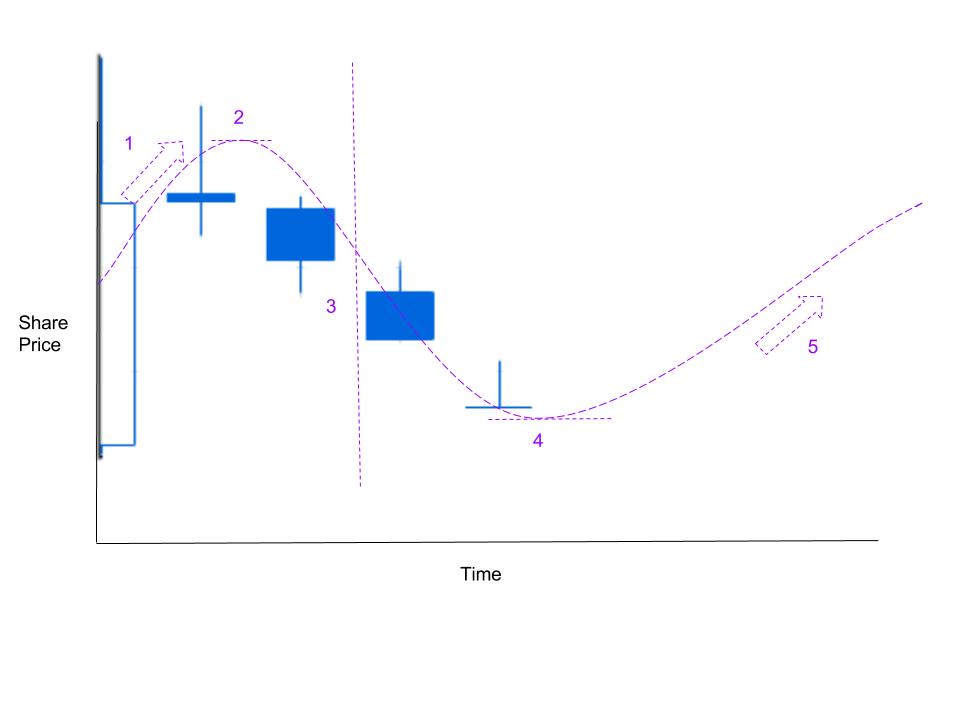
Bacanora Minerals is highly interesting for a number of reasons, which I’m going to discuss in more detail later. Primarily, I think that even without its highly positive portfolio a good trade could be made as a result of what I have christened (somewhat arrogantly) the Resource Sector IPO Curve:Resource Sector IPO Graph
Key:


1. IPO sentiment induced rise.
2. IPO sentiment reduction and IPO profit taking.
3. The stop in driven IPO sentiment and further profit taking.
4. The point of oversold.
5. The share price recovers towards IPO levels (and or above) as news-flow begins to drive the price.


Although for many this will be stating the blatantly obvious, it’s a very useful point to remember with resource sector companies, as it can greatly help making a good entry position.


Here’s what we get if we loosely overlay the daily chart since the IPO of Bacanora Minerals:


Bacanora Minerals Graph with Anotations.jpg
If we assume that the Resource Sector IPO Curve will hold true for Bacanora Minerals (and I see no reason to suggest that it won’t), we can see that the share price at its current levels is perfectly placed to begin the rise upwards towards £1 and beyond. Although this technique doesn’t always pan out correctly and certainly has some pitfalls, I’ve found that oftentimes it can be highly useful to ascertain when to make an entry into a resource sector stock post IPO.


Another reason why Bacanora Minerals is so interesting to me as a trader and investor is the relationship it has with another AIM listed company, Rare Earth Minerals:


Rare Earth Minerals hold an 11.94% stake in Bacanora Minerals, but they also have a 30% stake in Mexilit (with the other 70% being owned by Bacanora Minerals) under a joint venture arrangement. This effectively means that Rare Earth Minerals have a 30% stake in the El Sauz and Fleur concessions (known as the Sonora lithium project), which has been a major driver in Rare Earth Minerals’ huge share price gains this year-to-date (please see the share price following the 21st August 2013 “Final Drill Results Mexico Lithium Project” RNS for proof of this).


This relationship between the two companies is particularly useful for investors and traders, because it appears that Rare Earth Minerals is presently slightly ahead of Bacanora Minerals in terms of the share price curve (even if we ignore it’s further indirect investment in the project via its 11.94% stake in Bacanora Minerals). This relationship is most easily presented through a comparison of the two company’s market capitalisations:


Rare Earth Minerals (as of 01/08/14) =£89.71(m)
Bacanora Minerals (as of 01/08/14)   =£53.61(m)


Not wanting to offend any shareholders in Rare Earth Minerals (this is after all a discussion about Bacanora Minerals) I’m going to ignore their projects in Greenland and Australia. I’m in part doing this because it avoids some maths, but also because if you were to go through the RNSs from Rare Earth Minerals and plot them on the same graph as the share price for the company, you would find that there’s a pretty strong correlation between positive news regarding the Sonora Lithium Project and the company’s share price.


If we therefore assume (yes, I appreciate that there are significant flaws to this) that both companies are valued only on their stake in the Sonora Lithium Project, we end up with a quite clear market capitalisation disparity:


Rare Earth Minerals (as of 01/08/14) = £89.71(m) for a 30% stake in the Sonora Project.
Bacanora Minerals (as of 01/08/14)   = £53.61(m) for a 70% stake in the Sonora Project.


If we assume that the market is fairly valuing Rare Earth Mineral’s 30% of the Sonora Project at a share price of 1.63p and a market capitalisation £89.71(m), we would logically expect Bacanora Minerals (owning 70% of the project) to have a minimum market capitalisation of £62.79(m) or a share price of 89.06p and realistically be in a share price range between 90p and £1.10. 


Furthermore, on a realistic level we have to factor in the value associated with the borate projects, with the La Ventana borate project for example going into production next year. Being 100% owned by Bacanora Minerals this is another sharp arrow to add to the quiver of profit potential and if we added the value of this project onto the current market capitalisation of Bacanora Minerals we could see a target of between £2.00-2.50.


Table two entitled “Preliminary Financial Highlights”, shows quite clearly the potential value that the borate projects can add to the value of the company. The annual revenue of $25(m) on an expected mine life of twenty five years is especially exciting, as if proved it could cause a serious re-rate in the company’s share price. These borate projects added to the already misrepresented relative value of the Sonora Lithium project mean that I am personally targeting a conservatively low, but fair value around £1.50 - £2.00 with a lot of further upside potential.


Bearing in mind the above, we can now look in a more specific direction - at electric cars. Invented in the early 19th century, they saw a decline in use up until the point of 21st century technology developments and have since seen an enormous boom in use. Within the last few years the use of electric cars have more than doubled in the European Union alone (22,000 E.V.s sold in 2012 compared to the 50,000 sold in 2013) and we continue to see the growth in sales with analysts expecting electric cars to have at least 10% market dominance by 2020. The most notable recent news in this market has been automobile giant BMW Group jumping on the Electric Vehicle bandwagon with their New I3. With this we can see that the big names in the industry have realised this is a market they need a share in, and what this is going to do is push the market as well as the technology upwards as the big players try to gain dominance over the electric car.


Powered by a lithium battery, much like the one in your laptop, these cars require a good supply of raw materials. While the expected growth of the market for full electric of hybrid vehicles is still uncertain, if we follow the expected line of growth, up to 10% market share by 2020, the total number of electric cars sold in that year could be, on the low end of the guesses around 62 million or all the way up to 107 million.


So, if we take all the figures and do some maths, if 7.5 million electric cars are produced in the year 2020, with 15 kWh of batteries each containing 2 kg Li2CO3/kWh, the annual demand for the automobile industry alone would be 225,000 tons of lithium carbonate. This already a jump of 150% in demand for lithium based compounds since 2008, and we have only taken the automobile industry for the 2020 figures. Consequently the actual demand would be significantly higher still.


Take into account as well that the form of battery that the cars will need to take will likely change, that the lithium in already produced batteries isn’t easily recyclable, and that the projection figures for the growth in electric cars does not take into account the rapid urbanisation of the world, especially in LEDCs where you would expect electric cars to have dominance due to their low run cost and emissions and you have an enormous potential demand for Lithium.


If Bacanora was able to capitalise on only a small portion of this demand, the revenue streams would surely launch a company with a market cap of only  £53.61(m) into a much higher status. It is only going to be so long before the big investment players take notice of this, but once they do, we can expect a bull run in the resources sector, especially those in areas related to the growing market in E.V.s such as lithium, silicon and iron.


To conclude this short piece on Bacanora Minerals, I am investing in the company on the grounds that it’s significantly undervalued at its current share price for a number of reasons. In particular the relationship between Rare Earth Minerals and the Sonora Lithium Project illustrates that there’s a long way for Bacanora Minerals to move to the upside before even that project can be viewed as fairly valued in the market place. Further to this, the increasing resource demand for Lithium in particular is a longer term indicator of potential upwards share price pressure on Bacanora Minerals, with the Resource Sector IPO Curve showing that the current share price could well be a good time to begin to move funds into the company.